The attack came out of the blue. One minute myself and colleague Jordan were joyfully strolling along the pathway enjoying the glorious summer sunshine, the next a ferocious beast was hissing and spitting in our direction, making false lunges at us.
We abruptly halted, startled by this fearless display. I bravely tried to manoeuvre past it, but this just provoked further aggression. We backed down, turning and fleeing the way we had come. Glancing over my shoulder I was momentarily surprised to see our adversary charging after us. We legged it. The female pheasant didn’t follow.
It is normally the swans that are the trouble makers over the summer months, often alighting on the bridges, blocking passage, defecating on the woodwork, whilst their young cygnets paddle merrily around in the dykes. The cygnets, with their cute factor, get the oohs and ahhs from the public, as the adult swans are given a wide birth. These bold displays directed towards us are merely adult birds defending their young, and it was no different for the aforementioned pheasant. Behind her, scuttling about in the long grass were her chicks, barely a few days old. I was seen as a threat, a potential predator, a consumer of baby pheasants, and I nearly paid the price for getting too close.
Around the fen in mid-summer, the sights and sounds of fledged birds ring out from every corner. Back in June, as a bird ringer under licence from the British Trust for Ornithology, I undertook my annual bird box checks around the reserve.
To my delight, I was able to ring nearly 180 bluetit chicks, alongside a few broods of great tits. Of less delight were the large, black house spiders often found lurking under the box lids, leaving me little choice but to push my hand through their webs, perilously close to the spiders themselves. The chicks generally make little fuss as they are hoiked from their nests, bundled into a bag like some planned kidnap, before each in turn being inspected and ringed.
When handling the chicks, I often get the impression that these young birds are 90% gaping beak, with a bit of a body, two stumpy wings and a pair of legs. Downy fluff on their heads gives them a rather Chris Packham appearance. The birds are swiftly returned to their nest, gently placed back into the mossy layer at the bottom of the boxes, before carefully securing the lid back down.
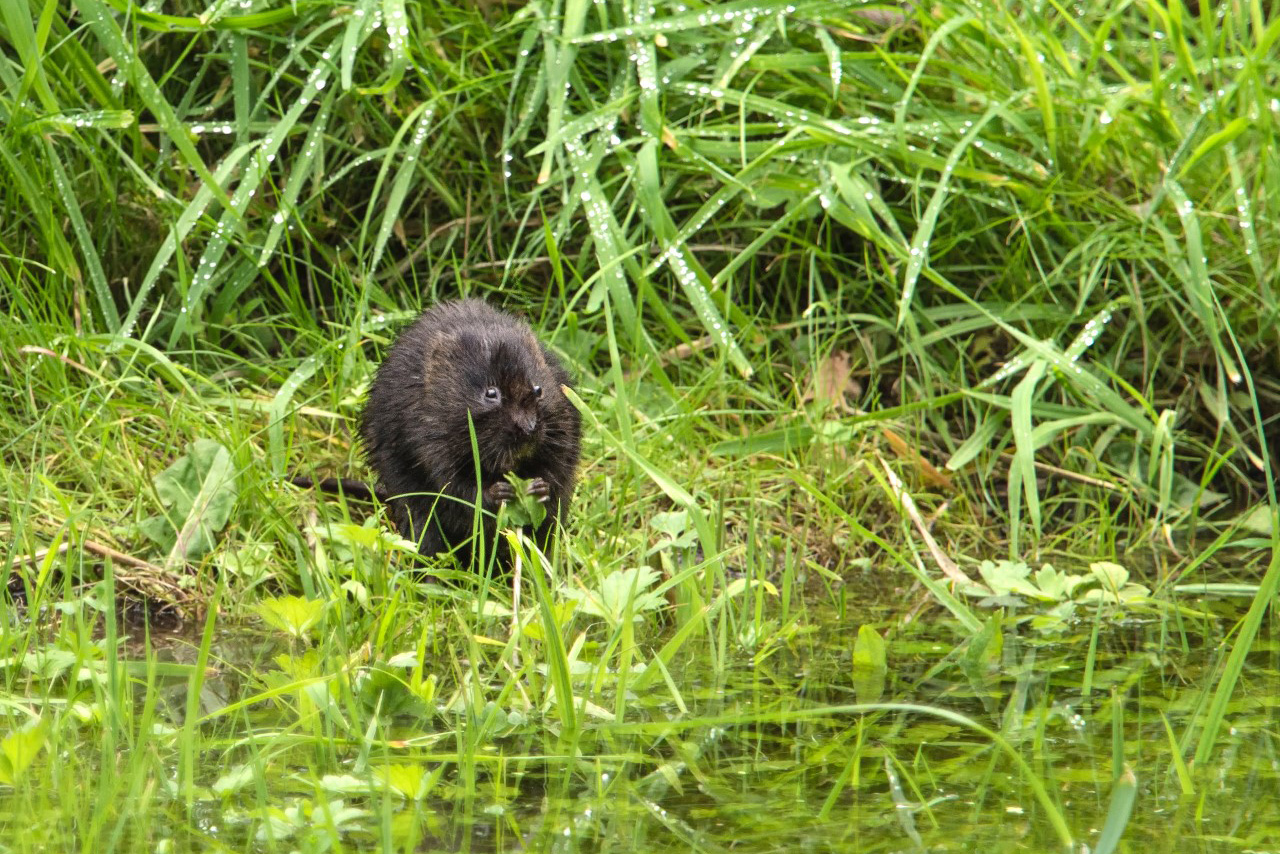
A Wheatfen Watervole, by Annie Kerridge
Around by the two small Broads I have regularly been enjoying watching a family of water voles. The extreme flooding of the winter months alongside the unwanted attention of the non-indigenous American mink have hit the water vole population hard in recent years. The sounds of their chomping radiate from the opposite bank as gentle ripples betrays where they feed in the shallows. A bit of patience whilst perched on the wooden jetty often leads to just reward; the appearance of the furry, rotund face of “Ratty” himself, swimming across the channel.
July saw me patrolling the fen, peering intently at the masses of yellow loosestrife flowers which jostled for space amongst the dense ranks of hemp agrimony, tangled trails of marsh pea and tufted vetch, and vibrant columns of purple loosestrife. I was looking for a species of solitary bee, one with a close relationship to the starry flower clusters of the yellow loosestrife. Eventually I was rewarded with a fine view of the yellow loosestrife bee, an invertebrate that collects floral oils from the
loosestrife. This waxy substance is used to provide a waterproof lining for its sub-terrestrial burrow. In turn, the flowers of the yellow loosestrife get pollinated by the visiting bees; not a bad trade-off.
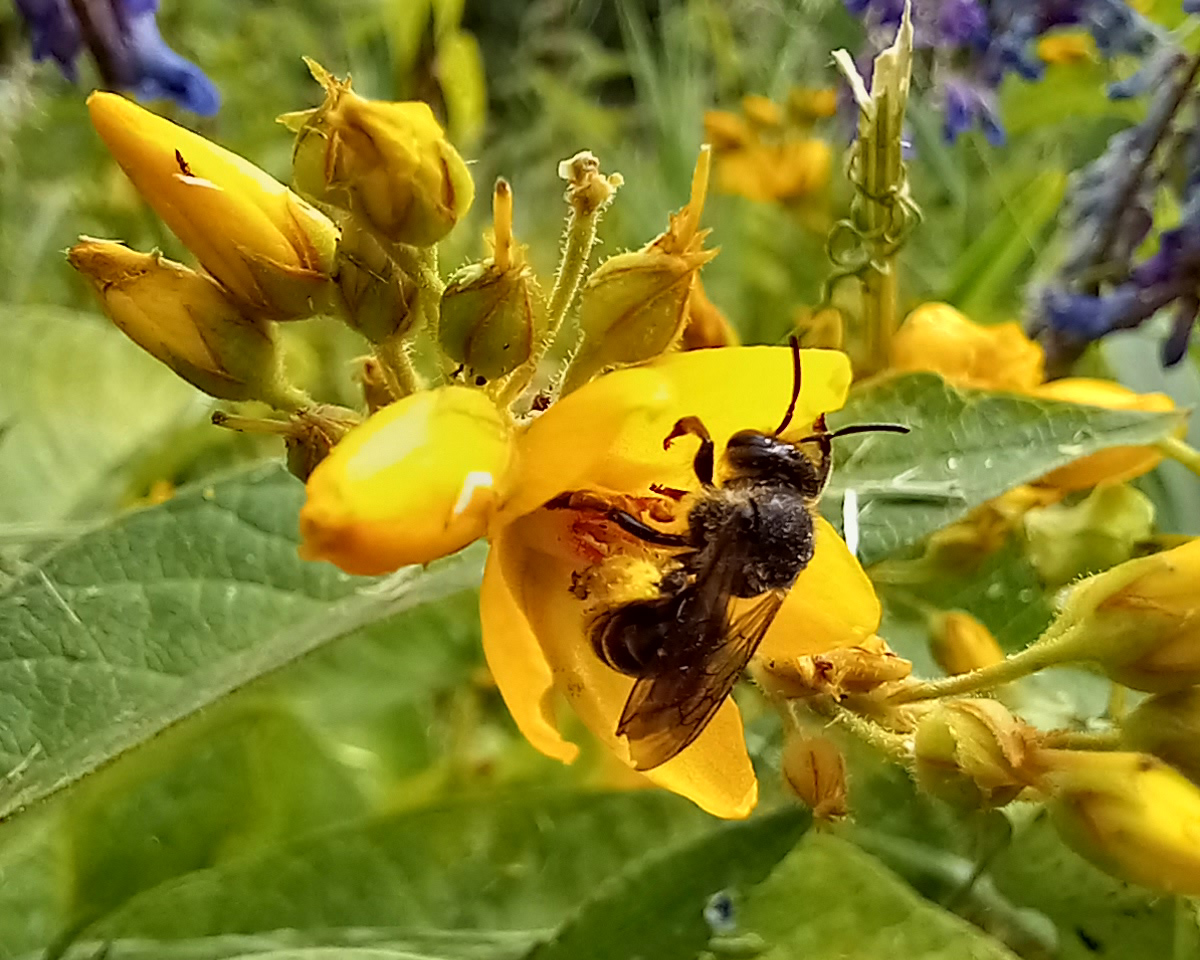
Bee feeding on a Yellow Loosestrife flower
It is always difficult to pick just a handful of highlights amongst the countless memorable moments that fill a summer at Wheatfen, but I will finish this short blog with a caterpillar. During a guided tour that myself and Jordan led around the fen, one eagled-eyed visitor amongst the crowd spotted a striking looking caterpillar on some tree foliage. Bright golden yellow bars contrasted against its jet-black body, where glossy-black clubbed hairs protruded sparsely. As luck would have it, I had seen a photo of this species on a social media page recently, and so was able to identify this rather attractive caterpillar as an alder moth larva.
As always, there is so much to see and experience at Wheatfen. I only wonder what my next discovery will be.
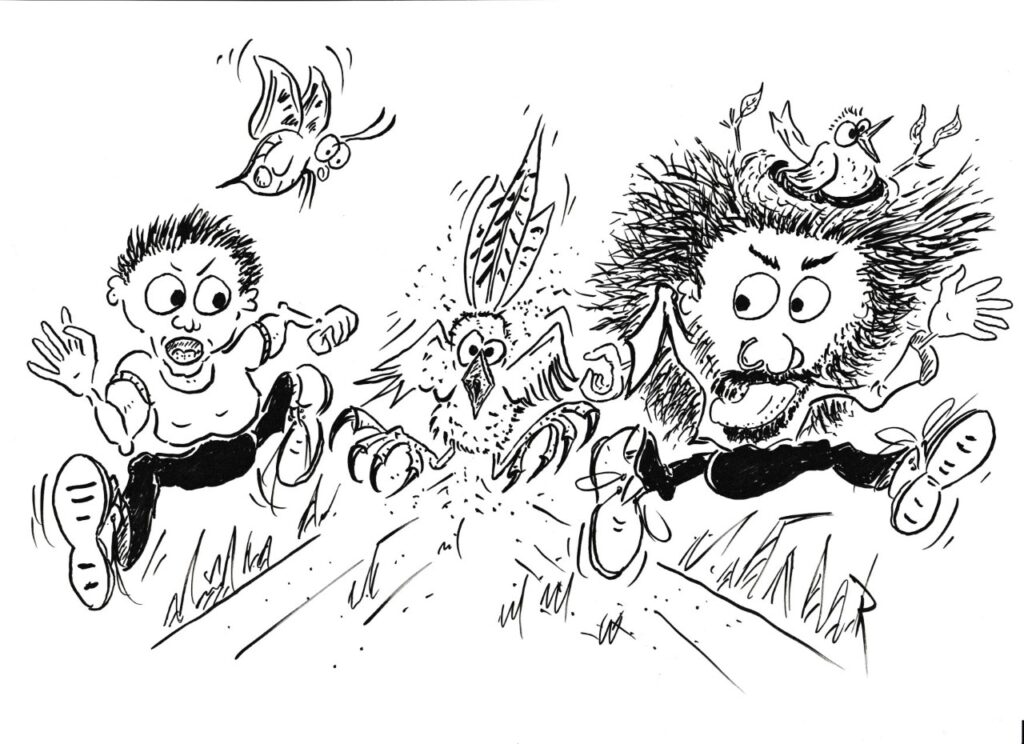
Pheasant Attack by Kevin Radley
